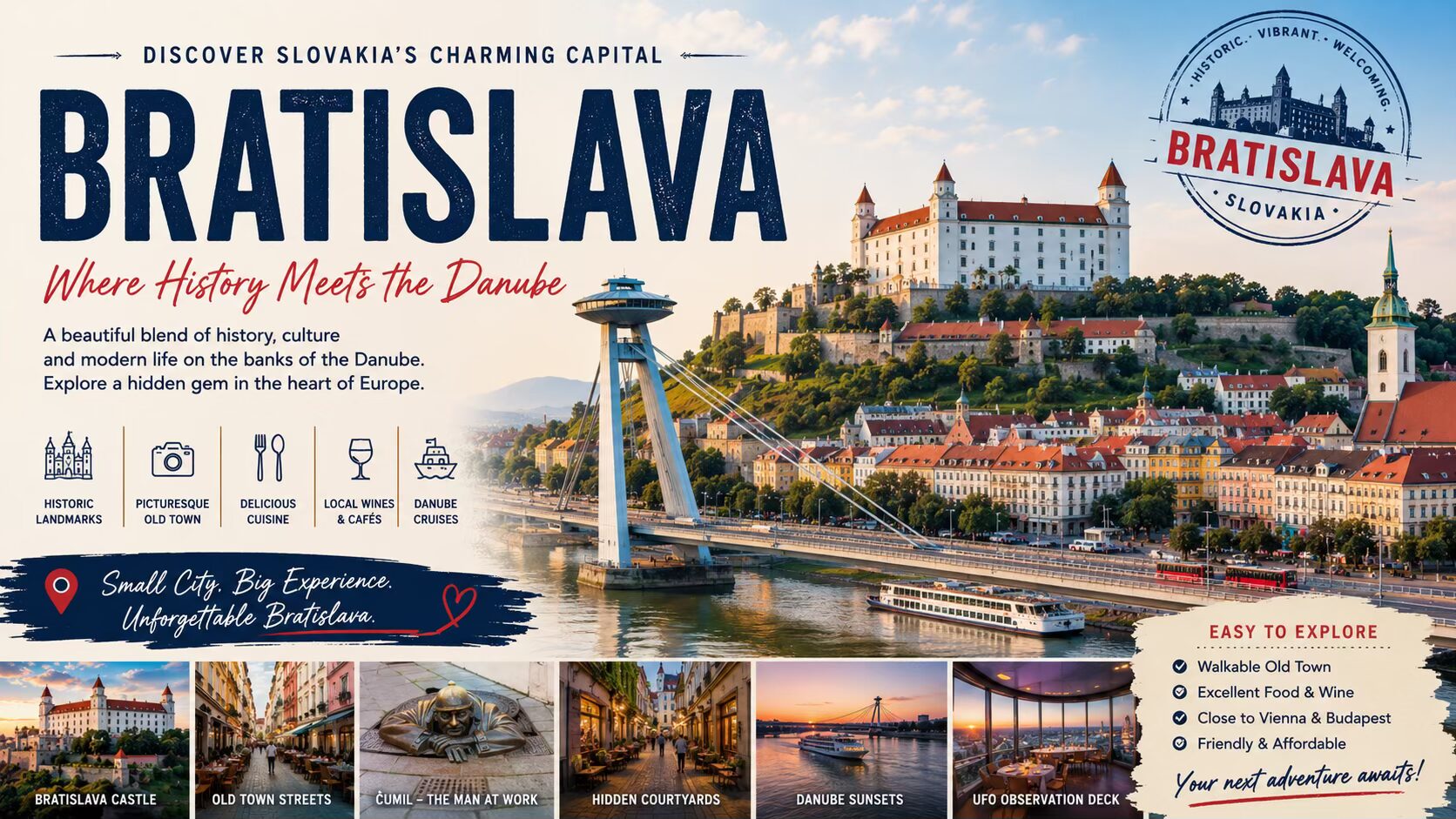
Bratislava may not receive the same attention as some of Europe’s larger capitals, but this charming city offers visitors a delightful combination of history, culture, architecture, and relaxed Central European atmosphere. Situated along the banks of the Danube River and bordering both Austria and Hungary, Bratislava is one of Europe’s most accessible and underrated destinations.
With its picturesque Old Town, hilltop castle, vibrant café culture, and rich history, Slovakia’s capital rewards travelers seeking an authentic European experience away from the crowds.
A Capital at the Crossroads of Europe
Bratislava occupies a unique position in Europe. It is the only national capital that borders two independent countries, Austria and Hungary. Throughout its long history, the city has been influenced by various cultures, empires, and peoples, creating a fascinating blend of architectural styles and traditions.
Known historically by several names, including Pressburg and Pozsony, Bratislava served as the coronation city of Hungarian kings and queens for nearly three centuries. This rich heritage remains visible throughout the city’s streets, palaces, and monuments.
Exploring the Historic Old Town
The heart of Bratislava is its beautifully preserved Old Town, a compact district filled with colorful buildings, narrow pedestrian streets, and charming squares.
Walking through the historic center is one of the best ways to experience the city. Visitors will discover elegant facades, hidden courtyards, and lively cafés around every corner. Unlike many larger European capitals, Bratislava’s Old Town feels intimate and easy to explore on foot.
The Main Square serves as the city’s social and historical center, surrounded by restaurants, museums, and centuries-old buildings that reflect Bratislava’s diverse past.
Bratislava Castle: Guardian of the Danube
Perched atop a hill overlooking the city, Bratislava Castle is the capital’s most recognizable landmark. Its distinctive rectangular shape and four corner towers dominate the skyline and provide spectacular views of the Danube River and surrounding countryside.
The castle has witnessed countless historical events, serving as a royal residence, military fortress, and administrative center. Today, it houses exhibitions dedicated to Slovak history and culture.
Visitors are often rewarded with some of the finest panoramic views in Central Europe. On clear days, it is even possible to see parts of Austria and Hungary from the castle grounds.
St. Martin’s Cathedral and Royal Heritage
One of Bratislava’s most important historical monuments is St. Martin’s Cathedral. This Gothic masterpiece played a central role in the Kingdom of Hungary, hosting the coronations of numerous kings and queens between the 16th and 19th centuries.
The cathedral’s towering spire is crowned with a gilded replica of the Hungarian royal crown, symbolizing its significance in European history.
Inside, visitors can admire beautiful stained-glass windows, impressive vaults, and centuries-old religious artwork.
The Danube River and Riverside Promenade
The Danube is an essential part of Bratislava’s identity. The river not only shaped the city’s development but also provides beautiful scenery and recreational opportunities.
The riverside promenade is a popular gathering place for locals and visitors alike. Restaurants, cafés, parks, and walking paths line the waterfront, creating an inviting atmosphere throughout the year.
Boat cruises on the Danube offer a different perspective of the city and allow travelers to appreciate Bratislava’s skyline from the water.
Unique Statues and Hidden Surprises
One of Bratislava’s most charming features is its collection of quirky public statues scattered throughout the Old Town.
The most famous is Čumil, often called “The Man at Work,” a bronze figure peeking out from a manhole cover. Visitors frequently stop to take photographs with this beloved city mascot.
Other unusual sculptures add character and humor to the streets, encouraging travelers to explore every corner of the historic center.
Modern Bratislava and Contemporary Architecture
While Bratislava proudly preserves its history, it is also a modern and rapidly developing capital.
One of its most striking contemporary landmarks is the UFO Observation Deck, perched atop the SNP Bridge. The futuristic structure resembles a flying saucer and offers breathtaking views of the city, the Danube, and the surrounding region.
Modern office buildings, shopping centers, and cultural venues showcase Bratislava’s transformation into a dynamic European capital while maintaining its historical charm.
Food and Drink in Bratislava
Slovak cuisine is hearty, flavorful, and deeply connected to local traditions. Visitors can enjoy a variety of authentic dishes that reflect the country’s rural heritage.
Bryndzové halušky, Slovakia’s national dish, consists of potato dumplings topped with sheep cheese and bacon. It remains a must-try for anyone visiting the country.
Traditional restaurants also serve roasted meats, soups, sausages, and seasonal specialties. Local pastries and desserts pair perfectly with coffee in the city’s numerous cafés.
Slovakia’s wine culture is often overlooked, but nearby wine regions produce excellent white wines that complement local cuisine beautifully.
Museums and Cultural Attractions
Bratislava offers a range of museums that provide insight into Slovak history, art, and society.
The Slovak National Museum explores the nation’s cultural development, while various galleries display works by Slovak and international artists.
The city also hosts festivals, concerts, and cultural events throughout the year, creating a lively atmosphere that extends beyond its historical attractions.
Day Trips from Bratislava
One of Bratislava’s greatest advantages is its location. Travelers can easily explore nearby destinations thanks to excellent transportation links.
Vienna lies less than an hour away, making it one of the most convenient international day trips in Europe. Budapest and Brno are also easily accessible by train or bus.
Closer to the city, visitors can explore the Small Carpathian wine region, medieval castles, and scenic countryside landscapes.
Best Time to Visit Bratislava
Spring and autumn are particularly pleasant times to visit Bratislava. Mild temperatures and smaller crowds make sightseeing comfortable and enjoyable.
Summer brings lively outdoor events, river cruises, and café culture, while winter transforms the city center with festive Christmas markets and holiday decorations.
Because Bratislava is smaller than many European capitals, it remains relatively manageable and enjoyable throughout the year.
Why Visit Bratislava?
Bratislava offers many of the qualities travelers seek in Europe: beautiful architecture, fascinating history, excellent food, riverside scenery, and welcoming locals. Yet it remains refreshingly less crowded than many of its famous neighbors.
The city is large enough to provide plenty of attractions but compact enough to explore comfortably in a few days. Its blend of medieval charm, royal heritage, modern energy, and strategic location makes it an ideal destination for both first-time visitors and experienced travelers.
Whether you’re strolling through the cobblestone streets of the Old Town, admiring views from Bratislava Castle, or enjoying a sunset along the Danube, Slovakia’s capital delivers an authentic and memorable European experience.