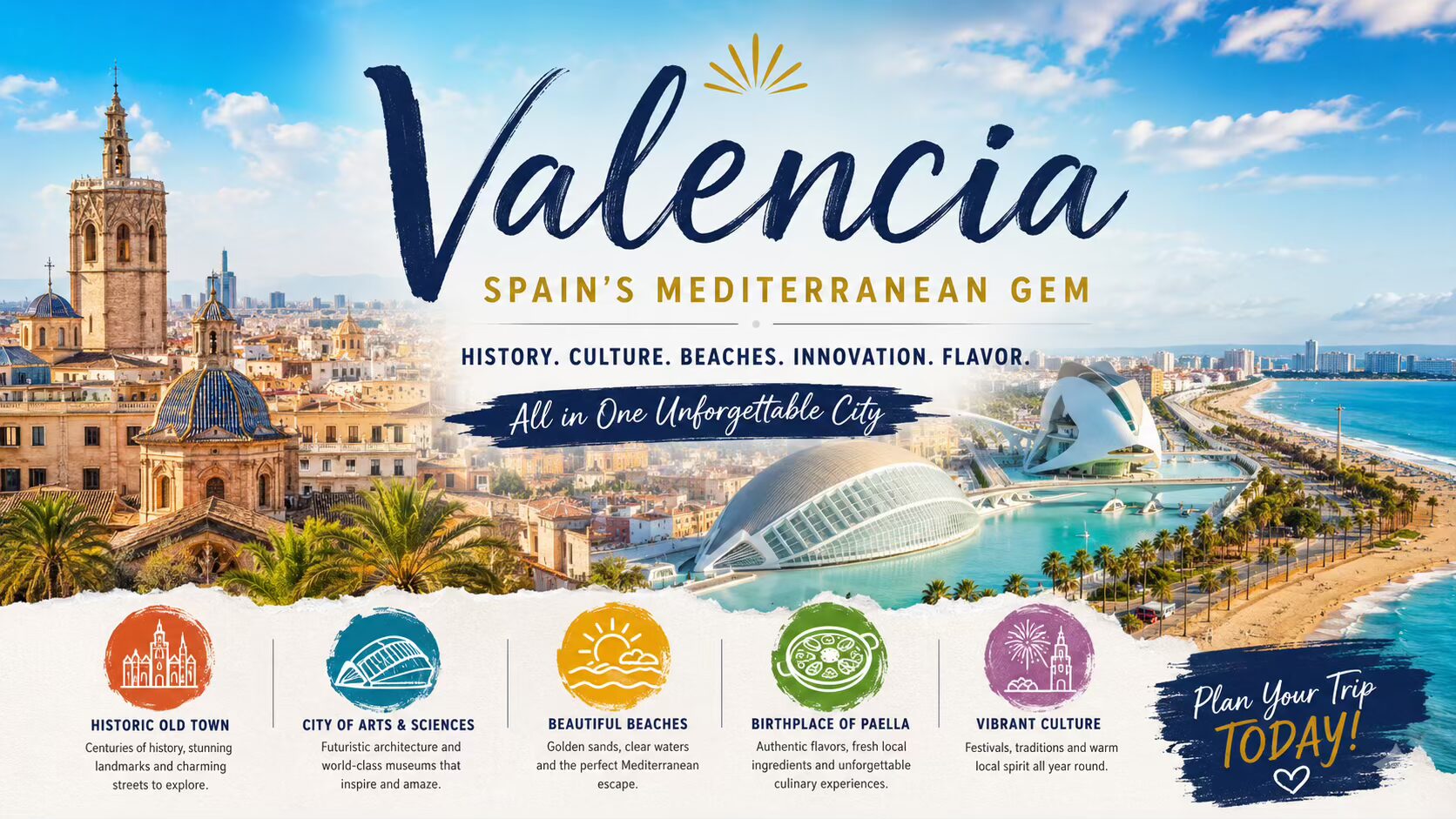
When travelers think of Spain, cities like Barcelona and Madrid often come to mind first. Yet along the country’s sunny eastern coast lies a destination that many visitors consider Spain’s best-kept secret: Valencia. Combining stunning Mediterranean beaches, a beautifully preserved historic center, world-famous cuisine, and futuristic architecture, Valencia offers an unforgettable experience for every type of traveler.
Whether you’re planning a relaxing beach vacation, a cultural city break, or a culinary adventure, Valencia deserves a place at the top of your travel bucket list.
Where Is Valencia?
Valencia is located on Spain’s eastern Mediterranean coast, approximately 350 kilometers south of Barcelona and 350 kilometers east of Madrid. As Spain’s third-largest city, it offers all the amenities of a major metropolitan area while maintaining a relaxed and welcoming atmosphere.
The city enjoys more than 300 days of sunshine per year, making it an attractive destination in every season.
Why Visit Valencia?
Valencia is one of the few European cities where visitors can enjoy historic landmarks, modern attractions, and beautiful beaches all within a short distance.
Unlike some of Spain’s more crowded tourist destinations, Valencia offers a more authentic experience. Visitors can wander through centuries-old streets in the morning, relax on golden sandy beaches in the afternoon, and enjoy fine dining or vibrant nightlife in the evening.
The city is also known for its excellent public transportation, extensive cycling paths, and high quality of life.
Explore Valencia’s Historic Old Town
Valencia’s history stretches back more than 2,000 years. Founded by the Romans in 138 BC, the city has been shaped by Roman, Visigothic, and Moorish influences before becoming one of Spain’s most important cultural and commercial centers.
The historic center, known as Ciutat Vella, is packed with architectural treasures and charming plazas.
Valencia Cathedral
One of the city’s most famous landmarks is Valencia Cathedral. Built between the 13th and 15th centuries, the cathedral combines Gothic, Romanesque, and Baroque architectural styles.
According to local tradition, the cathedral houses the Holy Grail, the cup believed by many to have been used by Jesus during the Last Supper. Whether or not you believe the legend, the cathedral remains one of the city’s most fascinating attractions.
El Miguelete Tower
Adjacent to the cathedral stands El Miguelete, Valencia’s iconic bell tower. Visitors willing to climb its 207 steps are rewarded with spectacular panoramic views over the city’s rooftops and surrounding landscape.
Plaza de la Virgen
This picturesque square serves as the historic heart of Valencia. Surrounded by beautiful architecture, outdoor cafés, and fountains, it is the perfect place to relax and soak in the city’s atmosphere.
La Lonja de la Seda
Declared a UNESCO World Heritage Site, La Lonja de la Seda (The Silk Exchange) is one of Europe’s finest examples of Gothic civil architecture. Built during Valencia’s golden age in the 15th century, it reflects the city’s importance as a major Mediterranean trading hub.
The City of Arts and Sciences
No visit to Valencia is complete without exploring the City of Arts and Sciences, one of the most recognizable architectural complexes in Europe.
Designed by renowned architect Santiago Calatrava, this futuristic district features stunning white structures surrounded by reflecting pools and gardens.
Highlights include:
- L’Oceanogràfic, Europe’s largest aquarium
- The Science Museum
- The Hemisfèric IMAX cinema and planetarium
- The Palau de les Arts opera house
The entire complex feels like stepping into the future and has become one of Spain’s most photographed attractions.
Valencia’s Beautiful Beaches
One of Valencia’s greatest advantages is its direct access to the Mediterranean Sea.
Malvarrosa Beach
The city’s most famous beach stretches for kilometers along the coastline and offers soft golden sand, clear waters, and a lively promenade filled with restaurants and cafés.
Patacona Beach
Located just north of Malvarrosa, Patacona Beach offers a more relaxed atmosphere while still providing excellent facilities and stunning sea views.
El Saler Beach
For travelers seeking a more natural environment, El Saler Beach is located within Albufera Natural Park and features pristine dunes, pine forests, and fewer crowds.
The Birthplace of Paella
Valencia is internationally famous as the birthplace of paella, one of Spain’s most iconic dishes.
Authentic Valencian paella differs significantly from many international versions. Traditional recipes typically include chicken, rabbit, green beans, and local ingredients rather than seafood.
Many restaurants throughout the city and surrounding countryside serve authentic paella cooked over open wood fires, providing a culinary experience that food lovers should not miss.
Beyond paella, visitors can also enjoy:
- Fresh Mediterranean seafood
- Tapas
- Horchata, a refreshing local drink made from tiger nuts
- Traditional Spanish pastries and desserts
Albufera Natural Park
Just a short drive south of Valencia lies Albufera Natural Park, one of Spain’s most important wetlands.
The park features a large freshwater lagoon, rice fields, forests, and diverse wildlife. It is particularly popular at sunset, when the calm waters create breathtaking reflections and unforgettable views.
Boat tours allow visitors to explore the lagoon while learning about the region’s ecology and cultural heritage.
Festivals and Local Culture
Valencia is famous for Las Fallas, one of Europe’s most spectacular festivals.
Held every March, Las Fallas features giant artistic sculptures, fireworks, street celebrations, traditional costumes, and dramatic bonfires that transform the city into an enormous open-air festival.
The event attracts visitors from around the world and offers a unique glimpse into Valencian culture and traditions.
Getting Around Valencia
Valencia is one of Spain’s most bike-friendly cities. Hundreds of kilometers of cycling paths connect major attractions, beaches, and neighborhoods.
Visitors can also use:
- Metro services
- Modern tram lines
- Extensive bus networks
- Affordable taxis and rideshare services
Many of the city’s main attractions are within walking distance of one another, making Valencia an ideal destination for independent exploration.
Best Time to Visit Valencia
Valencia enjoys a Mediterranean climate with mild winters and warm summers.
- Spring (March–May): Ideal weather and blooming parks.
- Summer (June–August): Perfect for beach vacations.
- Autumn (September–November): Pleasant temperatures and fewer crowds.
- Winter (December–February): Mild conditions compared to much of Europe.
For many travelers, spring and autumn offer the best balance between comfortable temperatures and manageable tourist numbers.
Final Thoughts
Valencia perfectly combines history, innovation, gastronomy, and seaside relaxation. From its medieval streets and UNESCO-listed landmarks to its futuristic architecture and sun-soaked beaches, the city offers something for every traveler.
Whether you are visiting Spain for the first time or returning to discover a different side of the country, Valencia delivers an experience that is both authentic and unforgettable. It is a destination where centuries of history meet modern creativity, all under the warm Mediterranean sun.