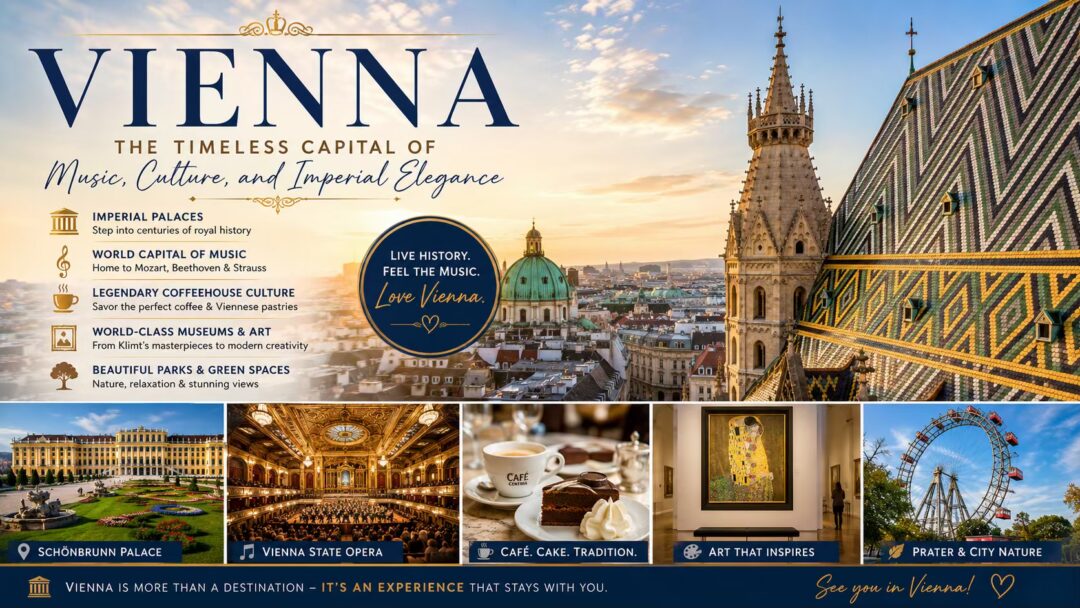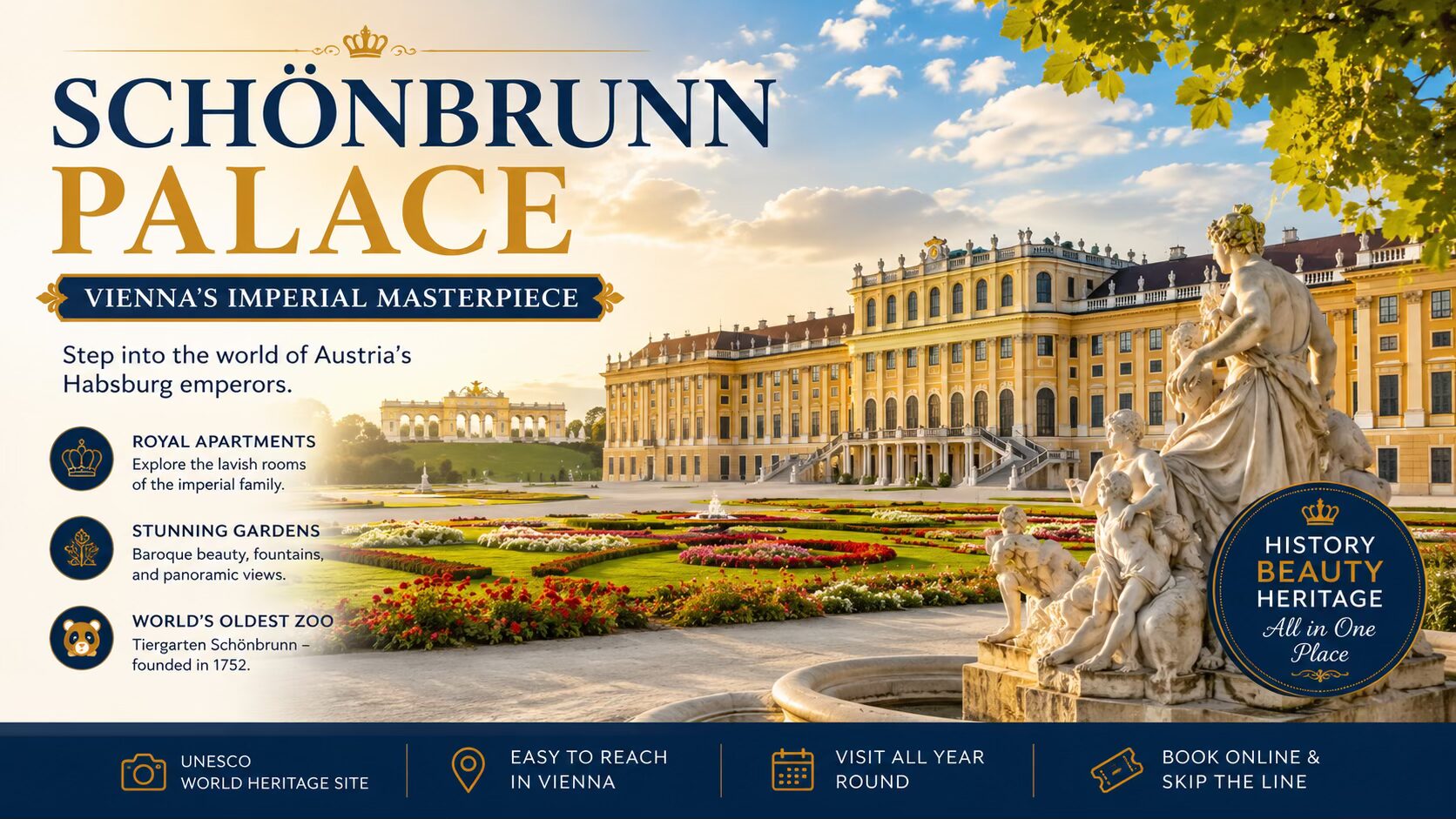
Few landmarks capture the grandeur of Austria’s imperial past quite like Schönbrunn Palace. Located in the heart of Vienna, this magnificent Baroque residence is one of Europe’s most beautiful palaces and a UNESCO World Heritage Site. With its lavish interiors, breathtaking gardens, and fascinating history, Schönbrunn offers visitors an unforgettable journey into the world of the Habsburg dynasty.
A Palace Fit for Emperors
The story of Schönbrunn Palace dates back to the 17th century, but it reached its greatest splendor during the reign of Empress Maria Theresa in the 18th century. Designed as the summer residence of the Habsburg rulers, the palace became the political and cultural center of the Austrian Empire.
Today, the palace features 1,441 rooms, although visitors can explore only a select number of its most impressive state apartments. Each room reflects the wealth, power, and artistic tastes of the imperial family, showcasing exquisite furnishings, crystal chandeliers, gilded decorations, and priceless works of art.
Highlights Inside the Palace
Among the palace’s most remarkable rooms is the Great Gallery, an opulent hall used for royal celebrations and diplomatic receptions. Its stunning frescoed ceiling and glittering crystal chandeliers make it one of the most spectacular interiors in Austria.
The Millions Room is another highlight, renowned for its rare rosewood paneling and intricate Persian and Indian miniature artworks. Visitors can also step into the private chambers of Emperor Franz Joseph and Empress Elisabeth, better known as Sisi, one of Europe’s most beloved royal figures.
The Magnificent Gardens
While the palace itself is extraordinary, the gardens are equally impressive. Stretching across vast grounds behind the main building, they are among the finest examples of Baroque landscape design in Europe.
Visitors can stroll along perfectly manicured pathways, admire colorful flower displays, and discover numerous attractions, including:
- The Gloriette, a hilltop monument offering panoramic views of Vienna.
- The Maze and Labyrinth, a fun attraction for families and children.
- The Palm House, one of the largest historic greenhouses in the world.
- The Roman Ruin and Neptune Fountain, two iconic features of the palace grounds.
The gardens are free to access and provide countless opportunities for photography and relaxation.
The World’s Oldest Zoo
Located within the Schönbrunn complex is the Vienna Zoo (Tiergarten Schönbrunn), founded in 1752. It is recognized as the oldest continuously operating zoo in the world and is home to hundreds of animal species, including giant pandas, elephants, and tropical birds.
For travelers visiting with children, combining the palace and zoo creates a full day of exploration and entertainment.
Best Time to Visit
Schönbrunn Palace can be visited year-round, but each season offers a unique experience.
Spring brings blooming flowers and pleasant temperatures, while summer showcases the gardens at their most vibrant. Autumn paints the grounds in beautiful shades of gold and red, and winter transforms the palace into a magical setting, especially during Vienna’s famous Christmas markets.
To avoid the largest crowds, consider arriving early in the morning or visiting during weekdays.
Tips for Visitors
- Book tickets online in advance during peak tourist seasons.
- Allow at least three to four hours to fully explore the palace and gardens.
- Wear comfortable shoes, as the grounds are extensive.
- Visit the Gloriette for some of the best views of Vienna.
- Consider a guided tour to gain deeper insight into the history of the Habsburg Empire.
Why Schönbrunn Palace Is a Must-See
Schönbrunn Palace is far more than a historic building—it is a symbol of Austria’s imperial heritage and one of Europe’s most treasured cultural landmarks. Whether you are fascinated by royal history, architecture, art, or simply beautiful landscapes, a visit to Schönbrunn offers an experience that combines all of these elements in one remarkable destination.
For anyone traveling to Vienna, Schönbrunn Palace is not just a recommended stop—it is an essential one.