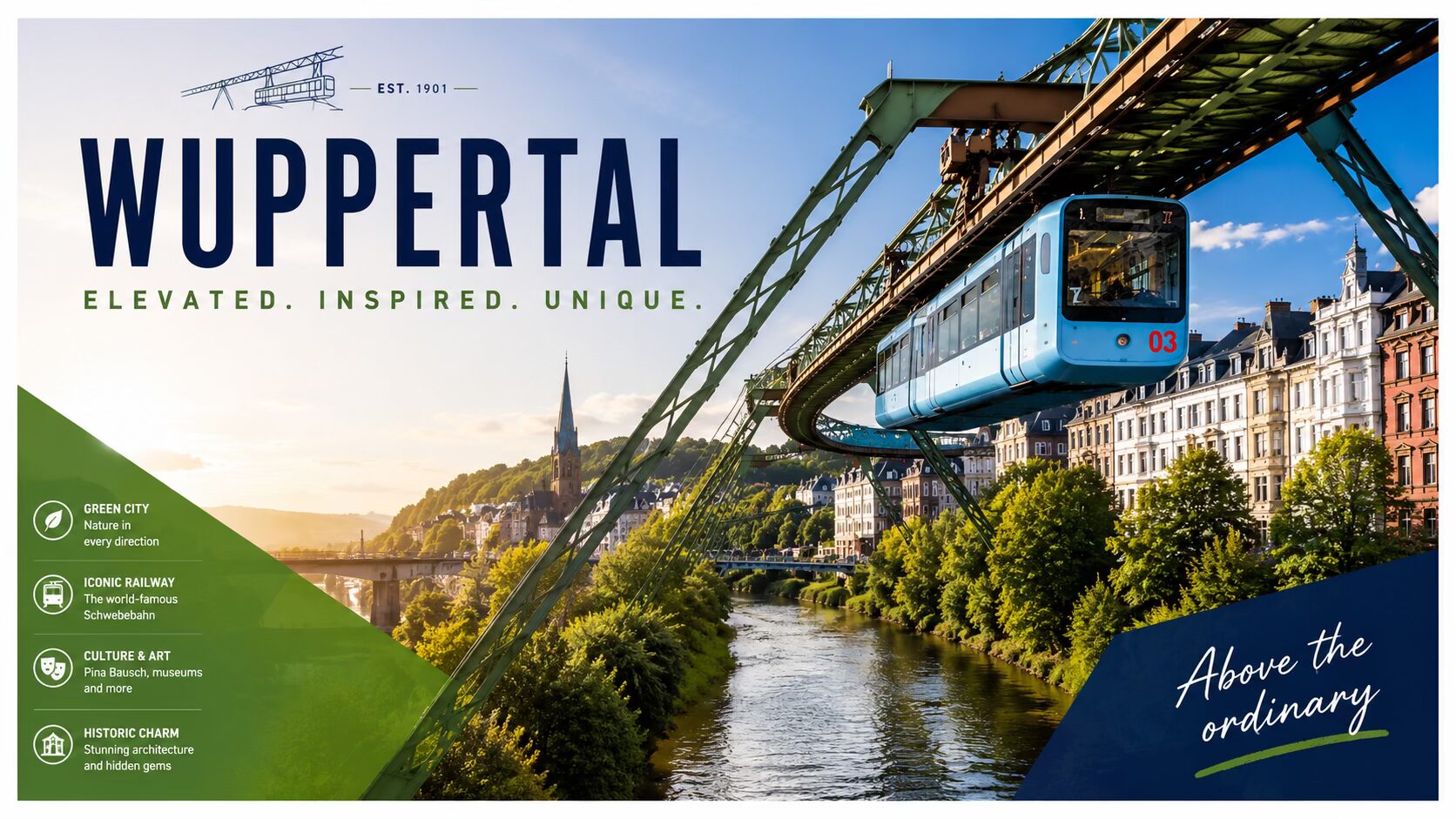
Nestled in the heart of North Rhine-Westphalia, Wuppertal is one of Germany’s most unique and underrated cities. While many travelers flock to Berlin, Munich, or Cologne, those who venture to Wuppertal discover a fascinating blend of industrial heritage, green landscapes, cultural treasures, and an engineering marvel unlike anything else in the world.
The Famous Wuppertal Suspension Railway
No visit to Wuppertal is complete without experiencing the city’s iconic Suspension Railway (Schwebebahn). Opened in 1901, this remarkable monorail system hangs above the Wupper River and city streets, carrying passengers through the urban landscape from a completely different perspective.
The Schwebebahn is not only a practical means of transportation but also one of Germany’s most beloved landmarks. Riding the historic railway offers stunning views of the river, charming neighborhoods, and the city’s distinctive architecture.
A City Surrounded by Nature
Despite its industrial roots, Wuppertal is surprisingly green. The city is built along the scenic Wupper Valley and surrounded by rolling hills, forests, and parks. More than a third of the city area consists of green spaces, making it a paradise for hikers, cyclists, and nature lovers.
One of the most popular destinations is the Hardt Park, a beautiful hilltop park featuring botanical gardens, walking trails, and panoramic views over the city. Visitors can enjoy peaceful strolls among exotic plants, historic monuments, and beautifully landscaped gardens.
A Rich Cultural Heritage
Wuppertal has long been a center of art and culture. The city is particularly famous as the home of legendary choreographer Pina Bausch, whose innovative dance theater transformed modern performing arts worldwide.
The Von der Heydt Museum is another cultural highlight. Housing an impressive collection of European paintings from the 17th century to contemporary works, the museum features masterpieces by renowned artists including Monet, Renoir, Picasso, and Van Gogh.
Throughout the year, Wuppertal hosts concerts, festivals, exhibitions, and theatrical performances that attract visitors from across Germany and beyond.
Architectural Treasures
Walking through Wuppertal reveals a fascinating mix of architectural styles. The city prospered during the Industrial Revolution, and many magnificent villas, historic townhouses, and elegant public buildings remain beautifully preserved.
The Briller Quarter is particularly noteworthy. Often considered one of Germany’s largest historic villa districts, it showcases stunning examples of late 19th-century architecture and offers a glimpse into the city’s prosperous past.
Exploring Beyond the City Center
Wuppertal’s central location makes it an excellent base for exploring western Germany. Major cities such as Cologne, Düsseldorf, Dortmund, and Essen are all within easy reach by train.
However, many visitors find that Wuppertal itself offers more than enough to fill several days. From riding the suspended railway and exploring museums to relaxing in green parks and discovering hidden cafés, the city provides a refreshing alternative to Germany’s more crowded tourist destinations.
Why Visit Wuppertal?
Wuppertal combines innovation, history, culture, and nature in a way few cities can match. Its world-famous suspension railway, vibrant arts scene, beautiful parks, and authentic atmosphere make it one of Germany’s most intriguing travel destinations.
For travelers seeking something beyond the usual tourist trail, Wuppertal offers a memorable experience filled with surprises. Whether you’re a history enthusiast, architecture lover, culture seeker, or simply curious about one of Europe’s most unusual cities, Wuppertal deserves a place on your travel itinerary.