Some cities are defined by their past. Others are driven by their future. Berlin is both.
Germany’s capital is a city of remarkable contrasts—a place where centuries of history stand alongside cutting-edge architecture, where world-changing events have unfolded on ordinary streets, and where creativity seems to thrive around every corner. Berlin is not a city that reveals itself all at once. Instead, it invites visitors to explore, question, and discover.
Unlike many European capitals known for elegance and tradition, Berlin captivates with its authenticity, diversity, and constant reinvention. Every neighborhood tells a different story, making each visit a unique experience.
A City That Changed the World
Few places in Europe have played a more significant role in modern history than Berlin.
The city has witnessed the rise and fall of empires, survived devastating wars, and stood at the center of the Cold War for decades. Today, visitors can still see traces of these events throughout the city.
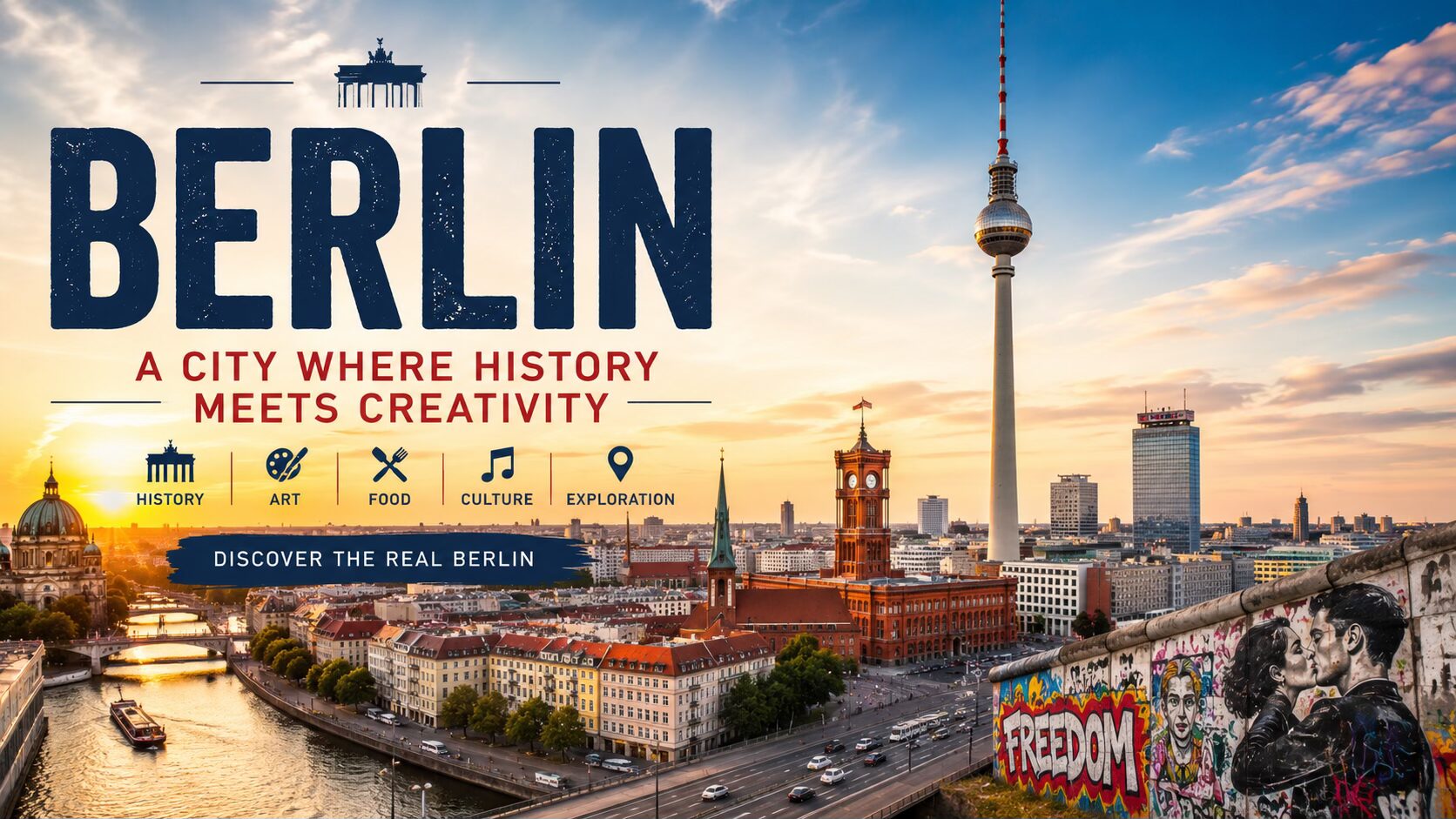
The iconic Berlin Wall, once a symbol of division, has become a symbol of freedom and unity. Sections of the wall remain standing, covered with colorful murals and powerful artwork that reflect the hopes and struggles of a divided nation.
The Brandenburg Gate, once located in the shadow of the wall, now stands as one of Germany’s most recognizable landmarks and a symbol of a reunited country.
Walking through Berlin often feels like walking through a living history book, where the past is remembered rather than hidden.
Beyond the Monuments
While Berlin’s history attracts millions of visitors, the city offers much more than museums and memorials.
What truly makes Berlin special is its atmosphere.
The city embraces individuality and creativity in a way few places can match. Former industrial buildings have become cultural centers, abandoned spaces have been transformed into galleries and cafés, and entire districts have evolved into hubs for artists, designers, musicians, and entrepreneurs.
Berlin encourages people to be themselves, and that spirit is visible everywhere—from street art and fashion to music and food.
The Heart of Modern Berlin
The city center combines historic landmarks with modern urban life.
Museum Island, located on the River Spree, is home to some of Europe’s most important museums and architectural treasures. Nearby, the impressive Berlin Cathedral rises above the skyline, while Alexanderplatz reflects the city’s dynamic modern character.
One of Berlin’s most famous landmarks is the Reichstag, home to the German Parliament. Its striking glass dome symbolizes transparency in modern democracy and offers panoramic views over the city.
Visitors quickly discover that Berlin is not defined by a single center. Instead, it is a collection of diverse neighborhoods, each with its own identity and culture.
Neighborhoods Full of Character
Every district in Berlin offers a different experience.
Mitte combines history, culture, and major attractions. Kreuzberg is known for its multicultural atmosphere, vibrant street art, and lively food scene. Prenzlauer Berg charms visitors with tree-lined streets, beautiful historic buildings, and cozy cafés. Charlottenburg showcases a more elegant side of the city, with grand avenues and impressive architecture.
Exploring these neighborhoods often becomes one of the highlights of any trip. Some of the best discoveries happen far away from guidebooks and tourist maps.
A Global Capital of Art and Creativity
Berlin has long attracted artists, musicians, filmmakers, and innovators from around the world.
Creative expression is part of the city’s identity. Visitors can find contemporary galleries, independent theaters, live music venues, and public art installations throughout the city.
Street art is especially prominent. Entire walls become canvases for artists, transforming ordinary streets into open-air galleries. In Berlin, creativity is not confined to museums—it is part of everyday life.
The city’s cultural calendar is equally impressive, featuring film festivals, concerts, exhibitions, and events that attract international audiences throughout the year.
A Food Scene as Diverse as the City
Berlin’s culinary landscape reflects its multicultural population.
Traditional German dishes remain popular, offering hearty flavors and regional specialties. At the same time, visitors can enjoy cuisine from nearly every corner of the world.
The city is particularly famous for its street food culture. Local markets, food halls, and outdoor vendors provide everything from traditional German snacks to international dishes prepared by chefs from dozens of countries.
Whether dining in a Michelin-starred restaurant or grabbing a quick meal from a neighborhood stand, visitors will find plenty of opportunities to explore Berlin through its food.
Green Spaces in an Urban Giant
Despite being one of Europe’s largest capitals, Berlin is surprisingly green.
Large parks, lakes, forests, and rivers are woven throughout the city. The vast Tiergarten, located near the city center, offers a peaceful escape from urban life. Locals gather in parks to picnic, cycle, jog, and enjoy outdoor activities during the warmer months.
The city’s commitment to public spaces creates a relaxed atmosphere that many visitors find refreshing compared to other major European capitals.
Berlin Through the Seasons
Each season reveals a different side of Berlin.
Spring brings blooming parks and lively outdoor cafés. Summer fills the city with festivals, open-air events, and long evenings along the riverbanks. Autumn paints the streets with warm colors and creates a cozy atmosphere in cafés and beer gardens. Winter transforms Berlin with festive markets, holiday lights, and seasonal traditions.
No matter when you visit, Berlin offers something unique to experience.
Why Berlin Leaves a Lasting Impression
Berlin is not a city that relies solely on beauty or famous landmarks to impress visitors.
Its appeal runs deeper.
It is a city that embraces its history while constantly looking forward. A place where creativity flourishes, cultures blend, and new ideas emerge every day. Berlin challenges expectations and rewards curiosity.
Some travelers come for the history. Others arrive for the art, nightlife, architecture, or culture. Most leave having discovered something they never expected to find.
Berlin is more than Germany’s capital. It is one of Europe’s most fascinating cities—a destination where every street, every neighborhood, and every experience contributes to a story that continues to evolve.
Visit Berlin once, and you will quickly understand why so many travelers return again and again to explore its endless layers.